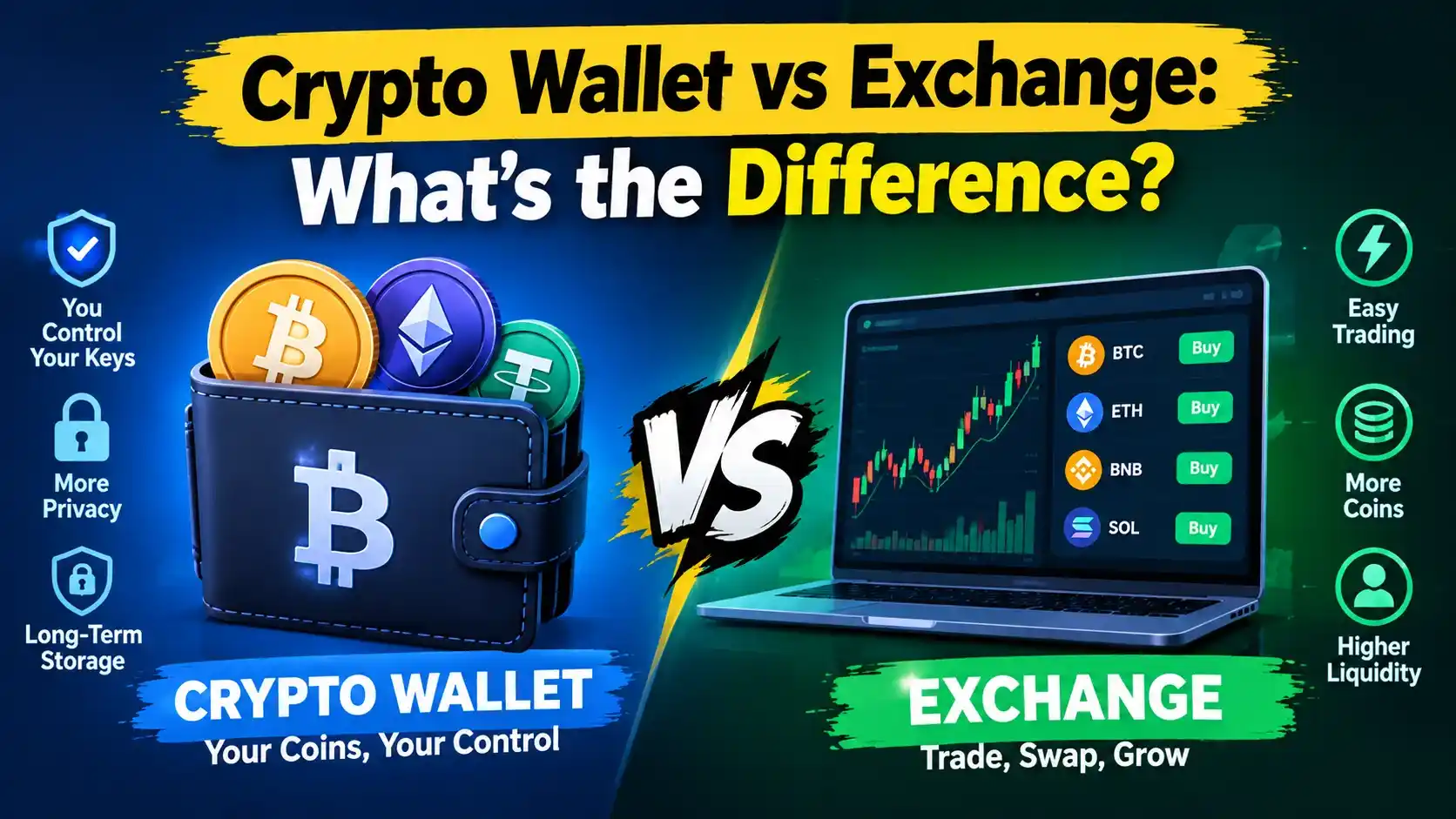
If you are new to cryptocurrency, you have probably heard the terms “crypto wallet” and “crypto exchange” many times. While both are important parts of the crypto ecosystem, they serve very different purposes. Many beginners often confuse the two and assume they are the same thing. However, understanding the difference between a crypto wallet and a crypto exchange is essential for keeping your digital assets safe and managing them effectively.
A crypto exchange is mainly used to buy, sell, and trade cryptocurrencies, while a crypto wallet is designed to store and protect your digital assets. Choosing the right option depends on your goals, whether you want to trade regularly or securely hold your cryptocurrency for the long term. In this article, we will explain the key differences between crypto wallets and exchanges in simple language, helping you make informed decisions and improve your overall crypto experience.
What Is a Crypto Exchange?
A crypto exchange is an online platform where users can buy, sell, and trade cryptocurrencies. It works similarly to a stock trading platform but focuses on digital currencies like Bitcoin, Ethereum, and many others.
Popular exchanges allow users to create accounts, deposit funds, and trade different cryptocurrencies. They often provide features such as market analysis, trading tools, and instant transactions.
Benefits of a Crypto Exchange:
- Easy to buy and sell cryptocurrencies.
- Suitable for active traders.
- Offers multiple trading pairs.
- Provides user-friendly interfaces for beginners.
Limitations:
- Exchanges can be targeted by hackers.
- Users do not always have full control over their private keys.
- Security depends on the platform’s protection measures.
What Is a Crypto Wallet?
A crypto wallet is a tool that allows users to store and manage their cryptocurrencies securely. Instead of holding actual coins, wallets store the private keys needed to access and control digital assets on the blockchain.
Crypto wallets come in different forms, including mobile wallets, desktop wallets, hardware wallets, and paper wallets.
Benefits of a Crypto Wallet:
- Greater control over your crypto assets.
- Enhanced security, especially with hardware wallets.
- Suitable for long-term storage.
- Reduces reliance on third-party platforms.
Limitations:
- Users are responsible for protecting their private keys.
- Losing recovery information can result in permanent loss of access.
Crypto Wallet vs Exchange: Main Differences
| Feature | Crypto Wallet | Crypto Exchange |
|---|---|---|
| Purpose | Store and secure crypto | Buy, sell, and trade crypto |
| Control | User controls private keys | Platform often controls keys |
| Security | Generally more secure | Higher risk if exchange is hacked |
| Best For | Long-term holding | Frequent trading |
| Accessibility | Direct asset control | Easy market access |
Which One Should You Choose?
The right choice depends on your needs. If you frequently buy and sell cryptocurrencies, an exchange can be very convenient. However, if your goal is to hold crypto for months or years, a wallet is usually the safer option.
Many experienced crypto users combine both. They use exchanges for trading and transfer their assets to wallets for secure storage after completing transactions.
Conclusion
Understanding the difference between a crypto wallet and an exchange is an important step for anyone entering the cryptocurrency world. Exchanges make trading simple and accessible, while wallets focus on security and ownership. By knowing how each works, you can better protect your investments and choose the solution that matches your crypto goals.
FAQs
1. Can I store cryptocurrency on an exchange?
Yes, most exchanges allow users to store cryptocurrency, but keeping large amounts there for long periods may carry security risks.
2. Is a crypto wallet safer than an exchange?
In many cases, yes. Especially hardware wallets, which offer stronger protection because users control their private keys.
3. Do I need both a crypto wallet and an exchange?
Not necessarily, but many crypto users prefer using both for convenience and improved security.